How translation can save us / Is translation even possible?
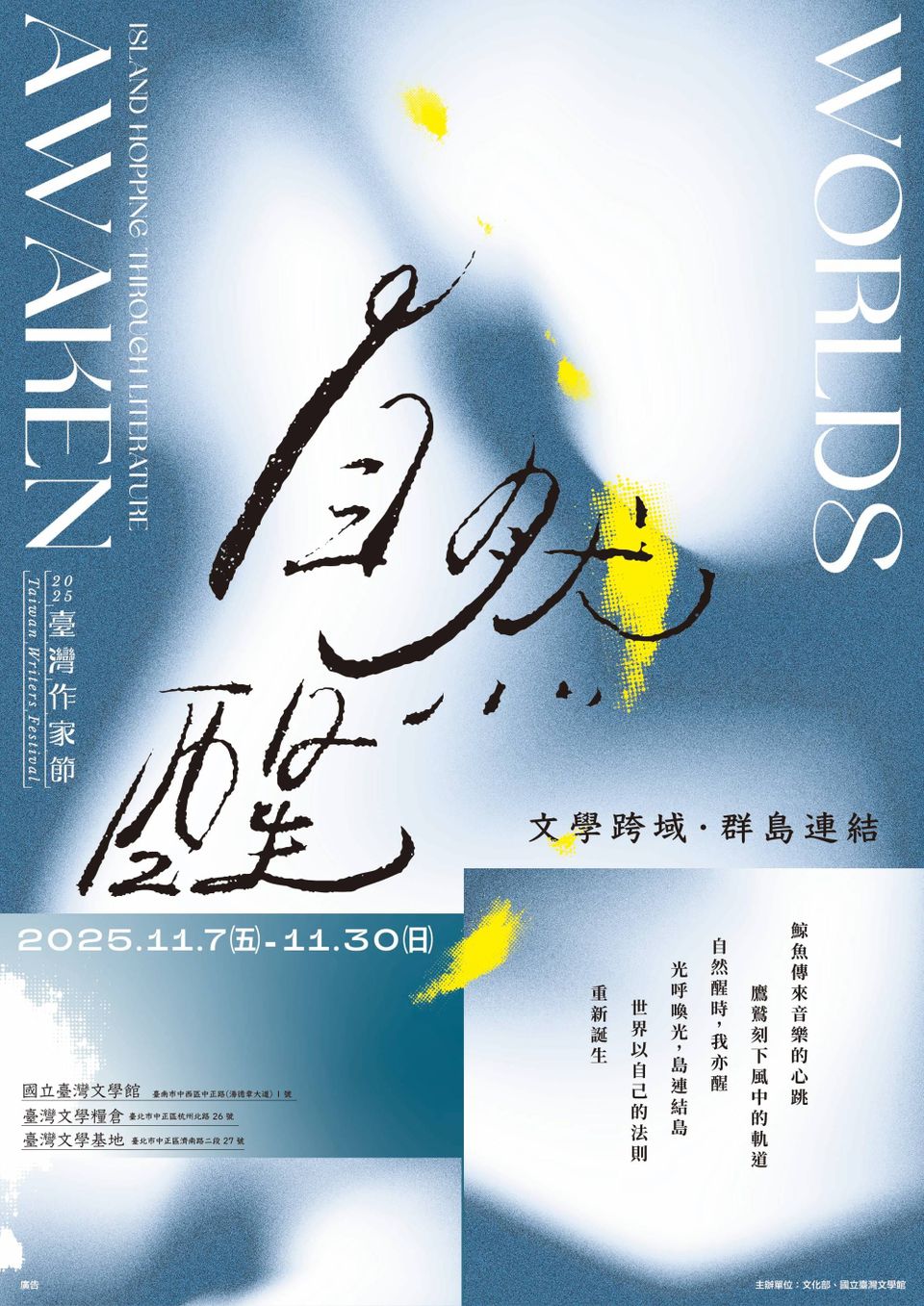
Earlier this month, I attended a week-long translation workshop in Tainan, co-hosted by the British Center for Literary Translation and the National Museum of Taiwan Literature. For one week, I gathered in the salon of the museum with 19 other emerging translators from around the world, all of whom specialize in translating from Mandarin to English and together, we considered the theory, cultural significance, practice, and livelihood of translation. A typhoon had just blown through the Philippines and was nudging its way towards Taiwan, but never really made landfall, so as a result, we were blessed with phenomenal weather. Most days, we pushed open the old wooden windows of the salon (the museum was built in 1916, under Japanese rule), and the breeze fluttered our papers gently as we worked between languages. Just outside, the rustling leaves of a towering phoenix tree joined our conversations.
The focus of the workshop was translating Taiwan literature, but we could all feel that the undercurrent, which carried us that week, was something bigger than mere words on a page. There were panelists flown in from Korea, Japan, Poland, the Czech Republic, the US, and the UK; and all 20 participants’ travel and accommodations and the weeks’ learning were subsidized by the Taiwan government. If Korea’s soft power is K-drama, K-pop, and K-beauty, then I think Taiwan would like its soft power to be the literary arts. As much as I wish literature weren’t weaponized for the sake of political gain, it has always played a crucial role in nation building, propaganda, and cross-cultural relations. We lament the decline of readership and shiver at the idea of AI taking over the world, and yet, poets are still exiled and disappeared for writing the truth. Literature matters and as such, translation is at the heart of truly trying to understand one another across different languages.
Politics is not how I came to translation, though – I’d written about how I’d fallen into this practice unexpectedly and without intending to. At the workshop in Tainan, I was the oldest participant with a (slightly adjacent) professional career, whereas my cohort was largely made up of young Masters and PhD candidates who were actually studying languages and translation. When I was getting my MFA in creative writing, literary translation was not one of the fields of concentration in my program. It is now. Of course, literary translation has always been a practice, but the movement towards celebrating it as a creative and artistic discipline in its own right has been gaining a lot of momentum in recent years. Perhaps this is in response to an ever more divisive world. Hence, what seems to be Taiwan’s way of reaching out, by telling our stories.
That said, I do sometimes wonder whether translation is an act of betrayal because it is imperfect. In order to really understand Taiwan literature, shouldn’t you experience it in its source language? In fact, I don’t believe everything is translatable. I’ve read translation theories by well-regarded scholars in the field who believe otherwise. But these scholars are white men who did not grow up code switching between languages and cultures. For me, that is one of the paradoxes of translation – that it’s impossible to fully translate from one language into another – something will always be lost – and yet I can’t help but to try. It’s the exact same impulse I feel with writing. At its heart, writing is the translation of ineffable emotions into words – that’s why we use metaphors, because we need to offer some approximate description of how we feel. I don’t think we can ever translate feelings into words perfectly, but we can get close and when you read something that approximates how you’ve once felt – or can imagine feeling – that’s the answer to why literature matters. It’s the moment when our ever more lonely species feels less alone.
At the workshop in Tainan, there was a special focus on Indigenous literature, which happens to be how I fell into translation, because I was so taken by the work of the young Truku writer, Apyang Imiq. When I was translating him, I did have moments when I questioned whether it was okay to be translating his writing into English, a language with which I have an increasingly complicated relationship, because it is impossible to divorce politics from this language of power. The only way to know was to ask Apyang what he wanted. I’ve visited Apyang once in Hualien and I’ve invited him up to Taipei another time and through our conversations, I know that yes, he would really like the world to hear his stories.
The final panel of the week was a conversation between Paelabang Danapan (孫大川), an esteemed Puyuma writer and political activist, Badai, also a Puyuma writer, and their translator from Mandarin to Japanese, Ms. Uozumi Etsuko. They spoke with the easy humor shared between old friends and reminisced about all the times Ms. Etsuko visited them in their village in Taitung over the past thirty years, drinking and listening to their stories. Every Indigenous writer who spoke to us that week told us they wanted their work to be translated, but the only way we could translate well was if we visited and spent time with them in their villages.
To close, Paelabang asked if there were any other questions from the audience. My classmate raised her hand and asked if she could hear them speak in Paiwanese. Paelabang’s eyes softened and he gave Badai a gentle nod and they started to sing, their voices round and full, like we were all scooped together inside the cavity of a very large bell. Ms. Etsuko joined in, her voice small, but full of admiration. I can’t tell you what they were singing about, but I can tell you that as I listened to the rhythm of their language, the lilt of their song, I felt as though I were being carried by the gentle current of a stream and without fully understanding why, I started to cry.