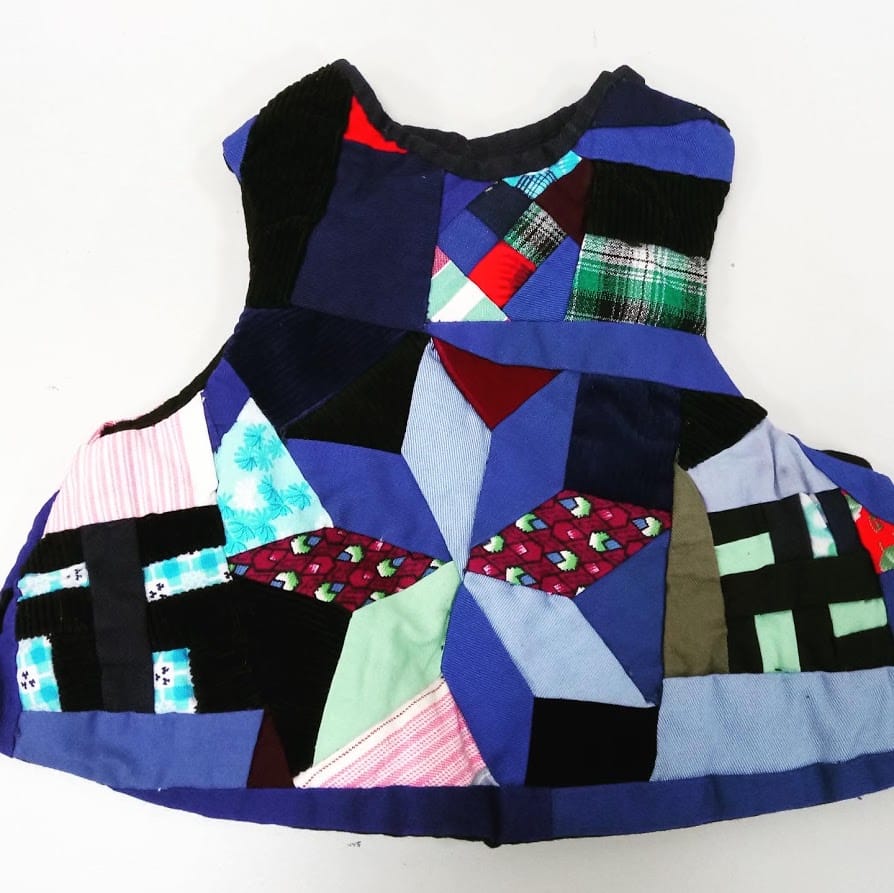
Hermit crabs

While renters are unburdened by the weight of home maintenance, they must succumb to the whims of their landlords, which is what we just experienced for the second time since moving to Taiwan. We lived in our first home for nine years until our landlord told us his grown children wanted to live in the house. We still had two years on our lease, but how could we argue against parents passing down their home to their children? We found a house just one hill down and rolled all our belongings down, hoping to be settled in this house until the year 2030, when our youngest child would graduate from high school. But then, three years into that lease, our landlord announced he wanted to sell his house and could we please leave? So here we are again, packing up our things to move.
This time, we are moving from a house to an apartment. Though the notion to move wasn’t ours, we’ve begun to view it as an opportunity to pare down, with our oldest off to college and our family beginning to downsize. In creative writing, I like to teach the “hermit crab” essay, which is when you use a specific form to write in. For example, you might write an essay about a recent break up in the form of a list of top ten songs to listen to when you’re sad; or maybe you’d write an essay about your relationship with your grandmother who loves to cook in the form of one of her signature recipes. The point is to use the contours of the specific form as a container for your story, like the hermit crab that naturally finds the appropriate shell to fit its changing body.
Still, even though we are emotionally ready to move, the work of going through a family’s things, organizing, boxing things up, disposing of things, and then physically moving from one space into another is exhausting work.
My husband and I have very different work styles. I’ve always been the type to start homework the moment I receive the assignment, whereas he likes to wait until the last minute. In the months leading up to the move, I was already cleaning out drawers and files, asking myself the philosophical questions of what it means to hold on to things and agonizing over letting go. I fantasized about clearing out the entire house so that when we moved, we were simply transporting things from one place to another and not simultaneously cleaning, throwing things away, and moving. My husband, however, did not feel any urgency. He commended me on the work I was putting in, but did not participate. When I spoke with my older son on the phone, he expressed no interest in our move. Because he now lived so far away, he felt it had little to do with him, even though he still had a room in the current house, filled with clothes, books, photos, trophies, and memorabilia. “You can throw it all away. They’re just things, Mom.” My younger son, the most sentimental among us, and therefore, the packrat of the family, still had boxes he hadn’t unpacked from the previous move. When I surveyed his room and gestured at all the tchotchkes cluttering each surface, he said, “Those are all important to me.” Only my daughter joined me in the preparatory work, but even she performed the job with lackluster energy. “I wish we didn’t have to move,” she sighed. I told my husband I felt like I was the only one who was moving. “It will get done,” he kept reassuring. We’ve been together for almost thirty years – long enough for me to know he was right, but I couldn’t help respond in my heart with exasperation. But how?
And then, two weeks before our move, our son came home from college for winter break and I dropped everything to be available for him. I stopped sifting through things and stopped bagging things up for donation or the garbage bin, stopped putting ads in the school digest for things to give away. I went grocery shopping for my son’s favorite foods; we had family dinners where all five chairs were occupied again, but afterwards, our oldest always had plans with friends, all of whom were also home for the holidays after their first semester in college. When exams were over, our younger son – now sixteen – also became a rare sight at home, filling his days training for sports and his nights hanging out with friends. One day, my dad and I accompanied my mom to the doctor for a follow-up appointment after some alarming health news (it turned out to be less precarious than we’d thought). I also had two writing deadlines coming up and when classes were over, I worked diligently in the mornings while everyone was still asleep to complete both writing deadlines. Meanwhile, the movers dropped off boxes for us. I pushed them to the corner.
One morning, I woke to find that my husband had begun to fill boxes with our books, clearing out a couple of our shelves. The next day, he had taken down all the photos around the house of the children at various ages and wrapped them in towels before sealing them in the boxes. The day after that, he went through all the kids’ sports equipment – soccer balls, shin guards, baseball bats, catchers’ gear, swim caps, and boogie boards – and organized them into piles to give away. The movers were coming in one week and each day before they arrived, my husband focused his attention on one room in the house; one aspect of our life together. Each morning, I admired the work he accomplished the day before, but I could not participate.
Then – a sudden, collective burst of energy held us all together the last night in the house. All evening, the sound of packing tape being screeched across boxes filled with the moments that were the mosaic pieces of our lives. When the movers arrived the next day, my husband stayed in the old house to clear out the debris, while I was stationed at the new apartment to clean and make sure boxes were being set in the correct rooms. The three children shuttled between the two places, bringing us sandwiches for lunch. When everything was cleared out of the old house, my husband joined us at the new apartment. For dinner, the five of us walked to a restaurant in our new neighborhood and our younger son said it felt like we were traveling, because we had spent the entire day together, something we so rarely do at home because everyone is busy with their own friends, interests, and responsibilities. It had been a physically and emotionally taxing day, but it was my favorite day of winter break.
After dinner, we continued to settle in our new home. We put on music, poured some wine, and unpacked boxes, placing books onto new shelves and utensils into new drawers. My husband said, “Moving is fun.” I looked at him in disbelief. “I mean,” he continued, while rubbing his stiff lower back, “I can’t imagine moving again, but I don’t mind moving with you.”
In Chinese, to organize and put things away is 收拾 – 收 “to gather” and 拾 “put away.” The character for “putting away” is made up of the radical for hand, because it’s an action word, and the character 合 which means “together” or “harmony.” What a way to conclude this arduous day of moving from a house to an apartment – for the two of us to begin this process of reverse hermit-crabbing, moving to smaller and smaller spaces, while the children grow up and peel away to find their own bigger and bigger hermit crab shells – and to know that this work of gathering and putting away will always be done together and in harmony.